Friday, December 7, 2012

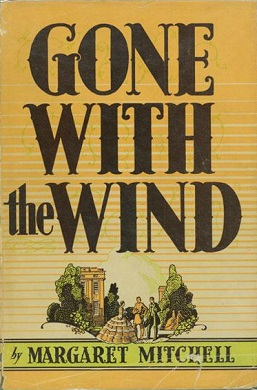
Gone With the Wind - Resistance

Gone With the Wind begins with the line "Scarlett O'Hara was not beautiful." Though, whenever people envision her, they envision the beautiful actress who played her, Vivien Leigh, with her sharp eyebrows and her beautiful eyes. Her skin is flawless, and so is her acting. But the book says that Scarlett O'Hara was not beautiful. So where does that leave us? It leaves us with the rest of the book's description. Scarlett is, instead, charming, and her face may not have perfect beauty, but it is eye-catching and for it seems, that is enough for Ms Scarlett O'Hara. Though her thick eyebrows and her sharply blended face may not be something that our culture finds beautiful today, you could envision her and see such the woman described - imperfect but charming, eye-catching, pleasing.

In a way, I feel that this is a metaphor for the aristocrat's view of the south, or at the very least, the slave-owners. They saw places like Tara as being Paradise, they saw the south as a place where of course there would be a problem here and there, but it seemed flawless to them, enough so that they went to war over it. Of course, places like Tara weren't perfect, but in the eyes of Scarlett O'Hara is was. She defends Tara, gets angry at anyone who criticizes Tara, especially towards the end. Most US citizens now do not see the South back then as being Paradise, instead, they see a land full of tyrants and racism. Even poor whites were discriminated, but to people like Scarlett, that was the way of life. Though Scarlett's character and friendship with the negroes who worked for her has gotten much criticism and accusations of "romanticizing slavery", though Scarlett still goes to get angry at Prissy because she told a lie, a lie that was totally reasonable, and seemed real. Still, Scarlett is one of the kindest to her slaves.

Many people find the idealized perfection of the south portrayed in the book and film to be erring, it is too perfect for the south that we hurt, the south that was rebellious but we brought back to earth. The personal version of it forces us to see that there were people who would have cooperated with the North but were caught up in a war that hurt them and their loved ones, their homes and their lives. When I first saw the movie (I saw it before the book, which in this case may be understandable for a 10-year old) I realized that what my fifth grade teacher had told me about the south was only half true, as she hadn't stopped to think about the fact that the people back then, down south, were real people not just the slave-owners history makes them out to be. Pat Conroy describes the book perfectly, a literary monument to a place that lost a war. Whoever wins writes history, but whoever loses is memorialized. And though many may not like it, as they don't want to face the humanization of the people they have resented for so long, they have to realize that there is no clear right and wrong, especially when it comes to war, as not everybody in the war has the exact same story as the man fighting next to him.

Friday, November 30, 2012

Extremely Loud & Incredibly Close

**CONTAINS SPOILERS!**

Oskar is nine years old, and his father died in 9/11. He left five messages on the answering machine, the last one was left four minutes before Oskar got home. I couldn't imagine that, imagine the fact that I was four minutes from having had the chance to talk to my father one last time. The only thing I would be able to do would be to sit with my mother, I would need her to tell me everything would be alright.

But Oskar is different. Oskar sees this as a need to protect his mom, it is his "most important raisons d'être", and this seems to be the biggest thing to protect her from. How does he do this? He stuffs away the home phone and buys a new one with his father's emergency money and re-does the answering message. He doesn't tell anyone, not even his grandma, one of the people he loves the most in the world. He feels that it is up to him to solve everything, to make everything alright, all on his own.

Oskar is... complex. He knows so much, it seems that his knowledge is endless, but yet he is still so naïve, he doesn't understand a lot, and he has a tight vocabulary, but he understands things like the plane crash, sex, death, and homelessness. Many may say that he is brave, in a sense, but he also just doesn't know enough to guide him, to tell him not to hide the phone, to tell his mom. You may think on the surface that you would want to know that your loved one had called you before they died and said that they loved you, but wouldn't it just hurt?

The fact that you weren't there to pick up the phone. Or if you had had a fight that morning. Or you hadn't said goodbye to them on your way to work. Maybe you never got to say "I love you". Perhaps you had tried to make sure they got to work on time. Wouldn't you feel that it was your fault that there would have been something that you could have done and really, there wasn't? And Oskar sees this, this naïve but wise nine year old understands that digging up old emotions won't benefit him or his mother.

Loss of a loved one is tough, especially when it is a freak accident or an attack, not being sick. When someone is sick, you can say goodbye, you can tell them you love them, and there is less reason to feel as if there was something you could have done or said. But people beat themselves up over it, they find it hard to let go of what they could have done to help, to save whoever died. And once you are able to steady yourself, think about it without always having to add to the "Reservoir of Tears", you must be getting better, you must be better, even if you don't always feel it. Because there will never be a 100% better, but you can always come close.

Friday, October 19, 2012

Kony 2012

Kony lives and exists as someone other than himself, he is in the minds of all of the rebel leaders, an influence to all of them. He is the biggest criminal reflecting leaders of organizations like his own LRA, showing how there are no moral values to these crimes. But what made him this way? Why is Kony such a terrible person? Taking this mysterious leader and trying to comprehend them, sympathize and empathize with them is hard, and like the Invisible Children - Kony 2012 video, this is an experiment, but for myself, to see if I can sympathize/empathize with a person so terrible. To try and understand who he was, to get why he is the way he is.

In 1961, a baby boy named Joseph Rao Kony was born to two farmers who lived in a Ugandan village, in Gulu, as a member of the Acholi people. He wasn't somebody you would expect to be a terrorist; he was an aggressive kid, sure, fighting with his siblings and sometimes resorting to physical violence. But a terrorist? His mother said that he brought a curse to the family, constantly making trouble, giving the family a bad name. His sister, Gabriela Lakot, said "as soon as he was born, he was standing on his own two feet." the rest of the village saw him as a strange little boy. 

Growing up, Kony was an altar boy, his father being Catholic, but stopped attending at fifteen; also around the time he dropped out of school. His older brother, Jamie Brow, was the village witch doctor, and when he died, Kony took over that position. Later on, Kony became part of the Holy Spirit Movement of Lakwena, who Kony is thought to be related to Kony. But after the Acholi president was overthrown, they they lost their influence, and Kony moved onto the Uganda National Liberation Front, his first raid on his home city of Gulu.

The rest is cruelty, cruelty that Kony inflicted on his own people, even from the start. I guess you could say that it is history too, Kony's climb through the "ranks" finally making it as his own in the LRA, being on top. But although he seemed a curse, a terrible awful child in the beginning, you can't help but see that he was and is only human. We all share who he is, a human, a person, a homo sapien, whatever you want to call it. I would imagine that his strangeness as a child, which lead to him being called a curse to the family, must have sparked his anger, or a fuel in him to be "better". Imagine being shunned or hated in some way or another by your family, who are certain that you are a devil's child, someone to be wary of. It would hurt, which doesn't (of course) give him an excuse to hurst others, especially children and babies, but you can understand.

It must have started with the fighting with his siblings, which is normal, I fight with my sister (rarely my brother or my oldest sister, close to never), it is a part of being a family. You disagree, you have your arguments, but in the end, they resolve. In Kony's case, they never did. He fought with not only words, but physical violence, which most likely wasn't tolerated that well in his village, especially seeing as his father was Catholic and probably didn't want his son causing such kinds of trouble. he dropped out of school taking over his brother's job as a witch doctor, which wasn't exactly Cathloic, but it wasn't so unusual either. This must have led to some sort of disagreement or another, and then most likely ended up making him leave, joining his first organization.

Honestly, Kony deserves to be the world's most wanted in my opinion, he not only deserves to be in jail, but soemthing more. He was born under circumstances that may have not been in his favour but he could have made the best of them, trying to show that he wasn't a devil's child, he was jsut a boy, trying to make it in his village. But he didn't. He acted upon the beliefs of his family and neighbours, making them probably resent him more and more, finally leading to today, where he wants power, wants to change something, but for himself, not for others. He has no cause, mo moral values, and although he has a sad(ish) backstory, it is no reason for him to have inflicted such pain.


Thursday, October 4, 2012

Am I Blue? - Hidden Identities

 **SPOILER WARNING!**

In the short story Am I Blue? by Bruce Coville, Coville shows the side of hypocrisy among the controversy of gay/lesbians. Shown through the eyes of a teen, Vince, who is on the fence about who he is, the story explores the world of gays who hide and those who cover it up with homophobia. The people in Vince's neighbourhood have surprising secrets - and truths - hidden behind everything they are on the outside. Melvin, Vince's fairy godfather, shows him this with and without words.

When Melvin first takes Vince to the café and gives him "Gaydar", Vince realizes just how many people are gay, and just how many people are hiding such a big secret. Vince sees so many people around his town who are blue, even in the slightest shades. Because he can see the blue people in pictures and on TV, his view of the world is changed even more. Melvin tells Vince about how he feels the world oppresses gays "If gay people hadn't been forced to hide for so long, we could just openly identify ourselves, there would be plenty of people that you could ask for advice. Everybody knows gay people, they just think that they don't." People from history like Julius Caesar and Alexander the Great were also gay, and so were lots of people around town. But they never identified themselves.


Like Mr Alwain, the man who owned the grocery store and had a wife and 3 kids, he was blue as a blueberry! But then there were people like Ms Thorndyke, who everybody thought they knew was lesbian, but in fact, didn't have a trace of blue on her, she was completely straight. People assumed that Mr Alwain was straight, just from the fact that he played the part of it. And Ms Thorndyke never showed any lesbian traits in front of others because she wasn't lesbian, people just assumed, because they could. Like Melvin says "Straights are helpless at it [gaydar]. They're always assuming that someone is or isn't [gay] for all the wrong reasons.

When Vince gets home and he turns on the telly, he sees that his favorite news anchor is a pale (but distinct) blue, like a summer sky. And so was the homophobic politician that the anchor was interviewing. Vince realizes what a hypocrite this man was, advocating against gays, talking about how it was such a "threat to the American Youth". Really, this man was afraid of who he was, and he expressed that by campaigning against who he was, not embracing it, and spreading awareness. And when Vince wishes that everybody in the nation (coast-to-coast) who was gay turned blue for 24 hours, the whole nation turns upside down. People can't hide from the truth anymore and neither can Butch Carrigan, Vince's tormentor at school, who always acts as if he is above Vince because he is straight. But Butch isn't straight, he knows himself to be gay, unlike Vince who is still confused. But Butch, like many others (such as the politician) couldn't handle who they were and took it out on others who were just like themselves only less... opinionated.

So many people everyday hide from the truth because "Blueday" never happened. People are still trying to cover up who they are, who their family is, and who their friends are. They try to act as if many people who are gay aren't, and it shouldn't be that way. If gays could openly identify themselves, like Melvin said, people wouldn't be so lonely and so scared. Confused teens would know who to talk to and homophobes couldn't try to avoid the topic. Hiding yourself should never have to happen, if only we could uncover the truth.


Thursday, September 27, 2012

The Drummer Boy of Shiloh - Motif

In The Drummer Boy of Shiloh by Ray Bradbury, a motif is used throughout the story. The motif is a peach blossom, which are in the story because it takes place in a peach orchard, by Owl Creek. The motif is also a metaphor, in quite a few ways, representing the biggest issues and characteristics of the story.


Peach blossoms occur in the story from the very start, "In the April night, more than once, peach blossoms fell from the orchard tree and lighted with rustling taps on the drum head." Peach blossoms also show up towards the middle of the story, representing the drummer boy's feelings, "A moth brushed his face, but it was a peach blossom. A peach blossom flicked his cheek, but it was a moth. Nothing stayed put. Nothing had a name. Nothing was as it once was." And the peach blossoms stayed in the story until the very end, "He lay next to it, his arms around it, feeling the tremor, the touch, the muted thunder as all of the rest of the April night in the year 1862, near the Tennessee River, not far from the Owl Creek, close to the Church named Shiloh, the peach blossoms fell on the drum."


The peach blossoms is used to represent innocence most of all, how the soldiers are naive, and see the war as a game. Peach blossoms are "innocent" because they aren't peaches, they're buds. The soldiers don't understand what it is to kill, these soldiers, they don't see it as life and death, not until the bullet is so close they are cross-eyed. The peach blossoms are like that, they aren't ready to be peaches, not ready to be grown. The peach blossoms show how they are pure, how they are young, too young to fall, and yet, they do still fall.

Falling peach blossoms. Falling is it's own metaphor, showing how how after each battle, some soldiers are stripped of their innocence, soon to be battle-worn and jaded. Not anything like they were when they said their good-byes and got onto that train to battle, donned their new blue or grey uniform. When a peach blossoms falls, purity falls from the tree, just like innocence is stripped from its soldier.

But a falling peach blossom doesn't just have to represent innocence of a soldier being stripped away, their minds and eyes finally understanding that people are dead, no more; and the cold, hardened man comes out. A falling peach blossom could also be a falling soldier who is still innocent, still doesn't understand. An innocent soldier dying is an innocent soldier no more. When a soldier finally sees they will dies, their innocence dying with them, that's when the peach blossom falls.

Although those aren't the only metaphors in the story, the only ways the motif is used, they are very large parts of the story. They represent the purity of each soldier, how each soldier can lose themselves in the war, which can only happen when their innocence is taken from them too harshly, too soon. The peach blossoms are almost a characteristic in their own right, personifying Joby's drum, giving the setting, acting as a channel for the soldiers' emotions, and being a motif.


Wednesday, September 12, 2012

"The Missing Girl" by Norma Fox Mazer

This summer, I read the book "The Missing Girl" by Norma Fox Mazer, is about the five Herbert girls: Beauty, Mim, Stevie, Fancy, and Autumn. They live a life that is full of troubles, they aren't financially stable, their father has hurt his back (perhaps forever) and their parents do not know how to deal with it. The girls have their own personal problems too, and you follow the voices of Beauty, Fancy, and Autumn. Beauty feels that she doesn't fit her name, much less fit in with the rest of the girls. Fancy is conveyed as being autistic, and becomes a voice of innocence of naïvety throughout the story. Autumn is the youngest sister, and she goes through her own struggle to be special, not just little.

As the girls go on with their lives and their daily struggles, they do not realize that they are being watched, watched by a nameless man. This man seems ordinary on the outside, normal job, clothes, keeps to himself. He is boring, lives in a house in a field at the end of a road. His house is solitary, he prefers it that way. He has two cats and he loves them very much, but he went through many cats to get to these perfect two. He has them... buried, and has lost count of how many died. His obsession with the girls becomes scary, not because he hurts them, but because they are his source of entertainment, what he revolves his schedule around.

One day, Autumn is taking a walk, and she loses track of where she is going, she loses track of where she is. She ends up near the end of a road, surrounded by a field, only one house in sight. A man is in the front yard, raking leaves, and she goes up to him, asking directions to her house. At first, he says he doesn't know, but, as she walks away, the man says that he has a town map inside, so why doesn't she come in? Autumn decides that it would be rude to say "no", and the man brings her inside and traps her. He reasons that this isn't wrong (sometimes, in the book, you are in his point of view), she walked right in. He is, obviously, very messed up psychologically, which makes him scary in the way his moods change so quickly, as if he were bipolar. 


"The Missing Girl" is a psychological thriller that kept me on edge the whole time I was reading. I wanted to know what happened next and what would happen to the girls. I highly recommend this book, but it isn't for those who can be scared very easily, as it is about a stalker, who seems so regular, seems so innocent, is somebody who could kill a cat without a thought or bit of guilt. I loved the book, and I cannot wait to read another book by her!